
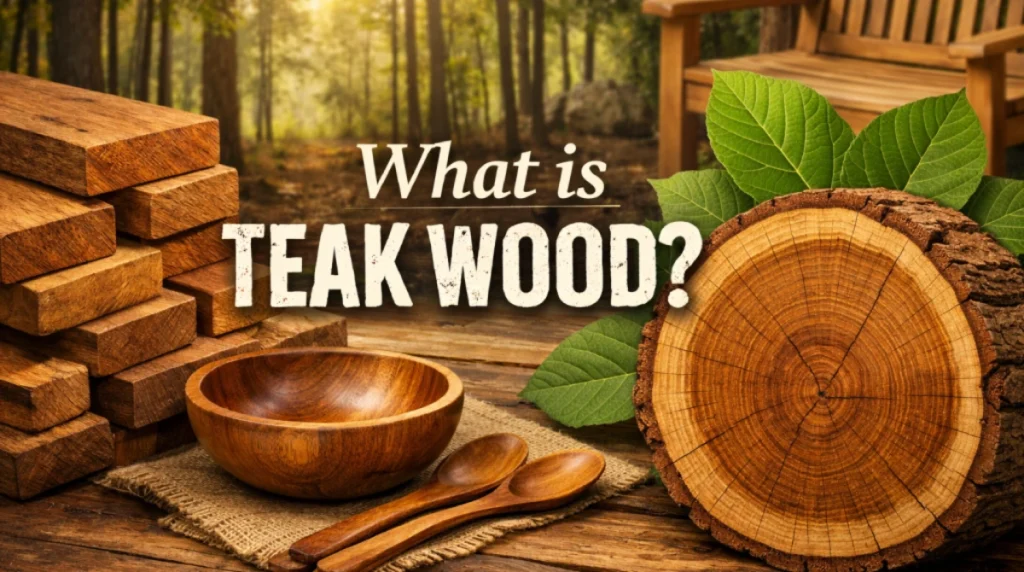
If you spend enough time on job sites or in the shop, you eventually develop a deep respect for certain materials. We talk about Walnut for its rich beauty and Maple for its rock-hard durability. But when the conversation turns to surviving the elements—rain, snow, sun, and rot—there is one name that shuts everyone up: Teak.
I remember the first time I milled a piece of genuine Burmese Teak. The first thing that hits you isn’t the look; it’s the smell. It smells earthy, almost like old leather. Then, you notice how heavy and waxy the board feels in your hands.
Teak (Tectona grandis) isn’t just another hardwood. In the woodworking world, it’s often called the “King of Woods,” and for good reason. It is naturally engineered by nature to survive conditions that would turn Pine into compost in a few seasons.
In this guide, we are going to break down exactly what Teak wood is, why it commands such a high price tag, and the practical realities of cutting, gluing, and finishing it in your shop.
The Basics: What Exactly is Teak?
Teak is a tropical hardwood tree native to South and Southeast Asia—specifically countries like India, Indonesia, Malaysia, Thailand, and Myanmar (Burma). It is a large, deciduous tree that can grow up to 130 feet tall.
While it’s famous for outdoor furniture and boat decks today, historically, it was the backbone of shipbuilding for centuries. Before fiberglass and carbon fiber, if you wanted a ship to survive the ocean, you built it out of Teak.
Identifying Real Teak
If you are at the lumber yard trying to spot the real deal, here is what you are looking for:
- Color: Freshly milled Teak is a beautiful golden-yellow to medium brown. Over time, as it oxidizes, it darkens to a rich brown. If left outdoors without oil, it eventually weathers to a distinguished silvery-gray.
- Grain: The grain is usually straight, though you will sometimes see wavy or interlocked grain depending on how the tree grew. The texture is coarse and uneven.
- The Touch Test: This is the big tell. Rub your thumb across a raw piece of Teak. It should feel slightly oily or waxy. That isn’t a finish applied by the mill; that is the wood’s natural oil content (tectoquinones) seeping to the surface.
Why is Teak So Special? (The Science of Durability)
I get asked this constantly: “Why should I pay $30 or $40 a board foot for Teak when I can buy Cedar for a fraction of the price?”
The answer lies in the chemistry.
Most domestic hardwoods, like Oak or Ash, need a protective finish (varnish, polyurethane, or paint) to survive outside. If water gets into the pores, the wood swells, cracks, and eventually rots.
Teak is different. It is packed with natural oils and rubber. Even after the tree is felled, milled, and dried, those oils remain inside the cellular structure of the wood. This makes Teak:
- Rot Resistant: The natural oils act as a preservative. Water can’t penetrate the wood fibers easily because the oil repels it.
- Pest Resistant: Termites and marine borers hate the taste of Teak oil. It’s a natural insecticide.
- Dimensionally Stable: Because it doesn’t absorb much moisture, Teak doesn’t warp, twist, or check (crack) nearly as much as other woods when the humidity changes.
I’ve seen Teak benches in public parks in New England that have sat through 50 winters. They turn gray, sure, but structurally? They are as solid as the day they were built.
Varieties of Teak: Not All Boards Are Created Equal
When you are buying Teak, provenance matters. The quality of the wood depends heavily on where it was grown and how fast it grew.
1. Burmese Teak (Old Growth)
This is the gold standard. It comes from old-growth forests in Myanmar. These trees grew slowly over decades or centuries, resulting in very tight growth rings and an incredibly high density of natural oils. It is the most durable and the most beautiful, but it is also becoming increasingly rare and difficult to import due to strict regulations and ethical concerns regarding deforestation.
2. Plantation Teak
To meet demand without destroying old-growth forests, Teak is now grown on plantations in Latin America, Africa, and Southeast Asia.
- The Difference: Plantation trees are harvested much younger (20-40 years). Because they grow faster, the growth rings are spaced further apart, and the wood is slightly less dense.
- The Verdict: It is still excellent wood, but it may have more color variation (lighter streaks) and slightly less oil content than old-growth Burmese Teak. For most furniture projects, it is perfectly fine.
3. “Teak” That Isn’t Teak
Be careful of marketing terms like “African Teak” (Iroko) or “Brazilian Teak” (Cumaru). These are great woods in their own right, and they share some properties with Teak, but they are not genuine Tectona grandis. If the price seems too good to be true, check the botanical name.
The Pros and Cons of Using Teak
Before you rush out to buy a stack of Teak for your next project, you need to weigh the benefits against the drawbacks.
The Pros
- Weatherproof: You can leave it outside 365 days a year. Rain, snow, and UV rays won’t destroy it.
- Low Maintenance: You don’t have to finish it. You can let it go gray naturally. If you want to keep the brown color, a simple coat of Teak oil once a year is enough.
- Beauty: The golden luster of freshly planed Teak is unmatched. It looks luxurious.
- Forgiving on Joints: Because it doesn’t expand and contract violently, your joinery (mortise and tenons, dovetails) stays tight for longer.
The Cons
- The Price: Teak is one of the most expensive commercial lumbers on the market. You need to measure twice and cut once, because every scrap piece hurts your wallet.
- Silica Content: Teak contains silica (sand) absorbed from the soil. This makes it incredibly tough on your tools. It will dull your saw blades and planer knives faster than almost any other wood.
- Gluing Challenges: Remember that oil I mentioned? It’s great for waterproofing but terrible for glue adhesion. Standard wood glue often fails because it can’t penetrate the oily surface.
Practical Tips: How to Work with Teak in the Shop
Working with Teak requires a slight adjustment to your normal workflow. Here are my tips from the jobsite:
1. Sharp Tools are Mandatory
Because of the silica content, you need to use carbide-tipped saw blades. If you run Teak through a planer with high-speed steel (HSS) knives, you might get great results for the first few passes, but those knives will be nicked and dull by the end of the day. Stick to carbide.
2. The “Acetone Wipe”
This is the most critical tip for joinery. Before you apply glue to a Teak joint, wipe the mating surfaces down with a rag soaked in acetone or denatured alcohol.
- Why? This temporarily dissolves the surface oils, allowing the glue to bite into the wood fibers.
- Which Glue? Don’t use standard PVA (white/yellow) glue for outdoor Teak projects. Use a waterproof glue like Titebond III or, even better, a two-part epoxy or polyurethane glue (Gorilla Glue).
3. Wear Protection
Teak dust can be an irritant. I know plenty of woodworkers who develop skin rashes or respiratory issues after breathing in Teak dust. Always wear a high-quality dust mask or respirator, and run your dust collector.
4. Pre-Drill Everything
Teak is dense and brittle. If you try to drive a screw near the end of a board without a pilot hole, it will split. Take the extra time to pre-drill and countersink your screws.
Common Uses for Teak
Outdoor Furniture
This is the most common use. Patio tables, Adirondack chairs, and benches made of Teak are investments. Unlike plastic or cheap pine, a Teak chair is something you can pass down to your kids.
Marine Decking
Go to any marina and look at the high-end yachts. The decking is almost always Teak. It provides excellent traction even when wet (thanks to the coarse grain) and doesn’t rot despite constant saltwater exposure.
Bathroom Fixtures
Because of its water resistance, Teak is perfect for shower mats, shower benches, and vanity countertops. It brings a warm, spa-like vibe to a bathroom that tile just can’t match.
Cutting Boards (The Debate)
You will see Teak cutting boards for sale, and they look beautiful. However, some woodworkers argue against them because the high silica content can dull your kitchen knives faster than a Maple or Walnut board would. Personally, I think they are fine for chopping blocks, but just be aware that you might need to sharpen your chef’s knife a little more often.
Sustainability and Ethics
We have to address the elephant in the room. The demand for Teak has led to illegal logging and deforestation in some parts of Southeast Asia.
As a responsible woodworker, you should look for Teak that is FSC Certified (Forest Stewardship Council). This certification ensures that the wood came from a responsibly managed forest or plantation that replants trees and respects the local ecosystem.
Reclaimed Teak is another fantastic option. Many importers specialize in salvaging Teak from old buildings, boats, or bridges in Indonesia. This wood is incredibly stable (it’s been drying for 100 years) and has a character and history that new wood just can’t replicate. Plus, it’s the most eco-friendly choice you can make.
Frequently Asked Questions (FAQ)
1. Does Teak wood need to be sealed or oiled?
No, Teak does not need to be sealed to survive. It is naturally oily and rot-resistant. However, if you want to maintain the golden-brown color, you should apply a Teak oil or sealer once or twice a year. If you don’t oil it, the wood will naturally weather to a silvery-gray color, which does not affect its structural integrity.
2. Is Teak wood waterproof?
Teak is highly water-resistant, but not 100% waterproof. Its high oil and rubber content naturally repels water, preventing it from soaking deep into the grain. This makes it the best wood option for wet environments like showers, boat decks, and patios, as it won’t rot or warp like other woods.
3. Why is Teak wood so expensive?
Teak is expensive due to high demand, limited supply of old-growth trees, and the long growing cycle required for plantation trees to reach maturity. Additionally, strict import regulations and shipping costs from Southeast Asia drive up the price. You are paying for a premium material that lasts decades longer than cheaper alternatives.
4. Can I paint Teak wood?
Technically, yes, but it is not recommended. The high natural oil content in Teak makes it difficult for paint to adhere properly, leading to peeling and bubbling over time. Furthermore, painting covers up the natural beauty and grain that makes Teak so desirable. If you must change the color, staining is a better option, but leaving it natural is best.
5. How do I clean outdoor Teak furniture?
For general cleaning, use a soft-bristle brush and a mixture of mild dish soap and water. Scrub across the grain to remove dirt and mildew. For gray, weathered Teak that you want to restore to brown, you can use a dedicated Teak cleaner and brightener product, followed by a light sanding and a fresh coat of oil.
Conclusion: Is Teak Worth the Hype?
Is Teak expensive? Absolutely. Is it hard on your saw blades? Yes.
But is it worth it? If you are building something that needs to last a lifetime outdoors, the answer is a resounding yes. There is simply no substitute for the combination of beauty, stability, and rot resistance that Teak offers.
When you build with Teak, you aren’t just building furniture; you are building an heirloom. Just remember to wipe your joints with acetone, keep your blades sharp, and save those scraps—at this price, even the sawdust feels valuable!